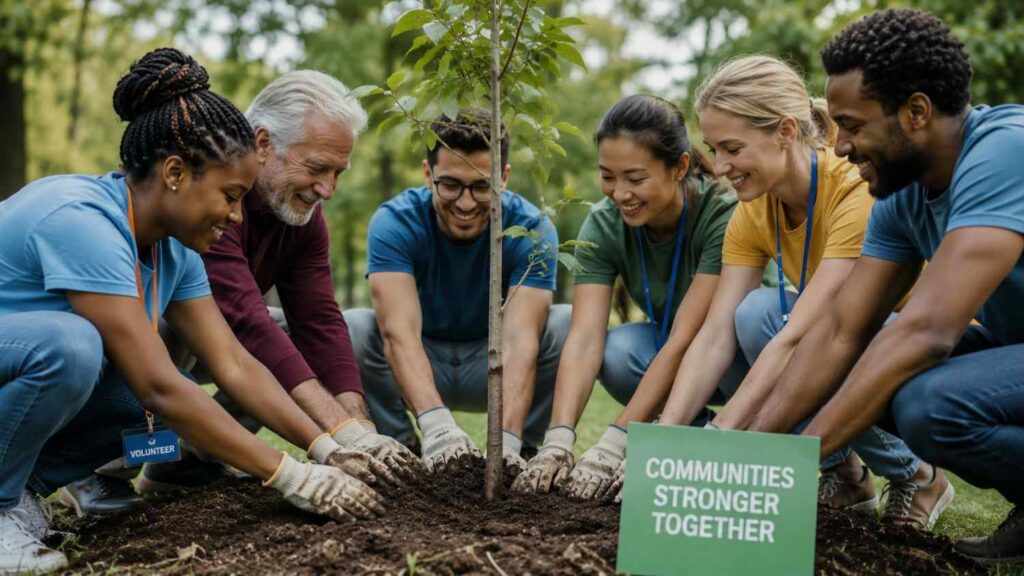
How Communities Are Making a Difference Globally
How Communities Are Making a Difference Globally is a powerful story of ordinary people creating extraordinary change. Around the world, communities are stepping forward to solve problems that affect daily life. They are not waiting for perfect systems, unlimited funding, or outside leadership. Instead, they are using local knowledge, shared values, cooperation, and persistence to build better futures.
Communities make a difference because they are close to the problems they are trying to solve. A local teacher understands why children stop attending school. A neighborhood volunteer knows which families need food support. A community health worker understands which health messages people trust. A youth group may notice safety, education, or climate issues before they appear in formal reports. This closeness allows communities to respond quickly, practically, and with compassion.
In today’s connected world, local action can create global impact. A small recycling project can inspire climate awareness. A women-led safety initiative can influence wider conversations about inclusion. A refugee-led support network can show governments and organizations how displaced people can lead solutions, not only receive help. These examples prove that global social change often begins at the local level.
This article explains how communities are creating change worldwide, why community-led development matters, and how individuals, nonprofits, businesses, and institutions can support stronger community impact.
Why Community Action Matters in a Connected World
Community action matters because most global challenges are experienced first at the local level. Poverty, climate change, health inequality, displacement, unemployment, food insecurity, and lack of education may sound like large international issues, but they affect real people in real places. A flooded neighborhood, an under-resourced school, an isolated elderly person, or a family without access to healthcare are not abstract problems. They are daily realities that communities often notice before anyone else.
This is why local communities are essential to meaningful change. They understand the social, cultural, economic, and environmental factors that shape people’s lives. They know who is most at risk, which solutions are practical, and where trust already exists. When global programs ignore local voices, they often struggle to create lasting results. But when communities are included from the beginning, solutions become more relevant, accepted, and sustainable.
In a connected world, community action also travels further than before. A local campaign can gain attention online. A community project can become a model for another city or country. A grassroots movement can influence policy, business behavior, and public awareness. This connection between local action and global impact is one of the main reasons How Communities Are Making a Difference Globally has become such an important topic.
Community action does not replace government, nonprofit, or international support. Instead, it strengthens it. The best results often happen when institutions provide resources and communities provide leadership, insight, and trust.
Local Knowledge Creates Better Solutions
Local knowledge is one of the strongest advantages communities have. People who live in a place understand its daily realities in a way that outside observers may not. They know which families are struggling quietly, which roads become unsafe during heavy rain, which young people are at risk of dropping out of school, and which cultural beliefs may affect health decisions. This type of knowledge is difficult to collect through reports alone.
When community members are involved in planning and decision-making, projects become more accurate and practical. For example, a water project designed without local input may place facilities in the wrong location or fail to consider maintenance needs. A health campaign may use language or messaging that people do not trust. An education program may miss the real reasons children are absent from school. Community-led development helps avoid these mistakes because it places local voices at the center of the process.
The World Bank describes community and local development as an approach that allows communities to participate in planning, managing funds, and implementing projects. This model is important because it shifts people from being passive recipients of help to active partners in development.
In my experience, the best community projects usually begin with listening. Before offering solutions, strong leaders ask what people need, what has already been tried, and what support would make the biggest difference.
Trust Helps Projects Last Longer
Trust is one of the most important reasons community projects succeed. Even a well-funded project can fail if people do not believe in it, understand it, or feel included in it. Trust helps people participate, share honest feedback, and take ownership of results. Without trust, outside programs may look impressive on paper but struggle to create lasting change.
Local leaders, teachers, religious figures, volunteers, youth organizers, health workers, and respected elders often play a major role in building this trust. They already have relationships in the community. People know them, speak with them, and are more likely to listen when they explain why a project matters. This is especially important in areas such as public health, education, women’s safety, disaster preparedness, and social inclusion.
Trust also supports long-term maintenance. A community that feels ownership of a school program, water system, local garden, or safety initiative is more likely to protect and improve it over time. This is where grassroots movements become powerful. They may start slowly, but their strength comes from relationships, shared responsibility, and consistent action.
Community impact is not only about launching new projects. It is also about creating systems that people continue to value after the first wave of support ends. Trust makes that possible.
| Community Approach | How It Works | Long-Term Benefit |
|---|---|---|
| Local leadership | Community members help identify priorities and guide projects | Stronger ownership and lasting results |
| Volunteer engagement | Residents contribute time, skills, and resources | Increased community participation and resilience |
| Collaborative planning | Local groups, nonprofits, and authorities work together | Better coordination and reduced duplication of efforts |
| Inclusive decision-making | Women, youth, refugees, and marginalized groups participate | Fairer and more effective community solutions |
| Capacity building | Training and knowledge sharing strengthen local skills | Communities become more self-reliant over time |
Key Areas Where Communities Create Global Impact
Communities create global impact in many different ways. Their work can be seen in public health campaigns, school support programs, climate action projects, disaster response, food distribution, refugee assistance, local entrepreneurship, and social inclusion efforts. These actions may happen in small towns, urban neighborhoods, rural villages, refugee settlements, or digital communities, but together they contribute to wider global progress.
One of the most important strengths of community action is flexibility. Large institutions may need time to plan, approve budgets, and coordinate formal systems. Communities can often move faster because they are already present. During emergencies, local volunteers may be the first to check on neighbors. During health campaigns, community workers may be the first to explain prevention steps in trusted language. During climate events, local groups may be the first to organize cleanup, shelter, or risk awareness.
These efforts also connect directly with sustainable development. The United Nations Sustainable Development Goals focus on poverty reduction, health, education, clean water, gender equality, climate action, and stronger communities. While these goals are global, communities help turn them into real action. They make development visible in daily life.
How Communities Are Making a Difference Globally can be understood best by looking at where their work creates the most visible value: health, education, climate resilience, humanitarian response, and social inclusion. These areas show how local action can support both immediate needs and long-term progress.
Health, Education, and Human Services
Health, education, and human services are among the clearest areas where communities create measurable impact. Community health workers, local clinics, volunteers, parent groups, teachers, and youth mentors often reach people who may be missed by formal systems. They help bridge the gap between institutions and families.
In healthcare, community workers can support awareness, prevention, basic care guidance, vaccination campaigns, maternal support, child health, nutrition education, and referrals to clinics. Their role is especially important in rural areas, low-income communities, and places where people may face language, transport, cost, or trust barriers. UNICEF has highlighted the importance of community health workers in delivering primary health support to children and families in different countries.
Education is another major area of community impact. Local tutoring groups, parent associations, school volunteers, scholarship drives, and digital learning programs can help children stay engaged. Communities also support students through mentoring, safe spaces, school meal programs, and after-school learning. These efforts may not replace formal education systems, but they strengthen them.
Human services include support for elderly people, people with disabilities, low-income families, refugees, and those facing crisis. When communities organize food drives, home visits, mental health awareness sessions, or emergency support, they help protect people who might otherwise be overlooked.
Climate Resilience and Local Sustainability
Climate resilience depends heavily on local action because climate problems affect communities in specific ways. One area may face floods, another may face drought, heatwaves, wildfires, water shortages, or crop damage. Local communities understand these patterns because they experience them directly. This makes their knowledge essential for climate planning and adaptation.
Community climate action can include tree planting, waste reduction, water conservation, local farming support, disaster preparedness, coastal protection, clean energy awareness, and environmental education. These actions may seem simple, but they help build long-term resilience. A community that knows how to prepare for floods, protect water sources, and support vulnerable families during extreme weather is stronger than one that waits for outside help only after damage occurs.
UNDP has emphasized the role of local governance in climate action because climate challenges are highly local. This means communities need a voice in planning, not just a role in implementation. When local people help shape climate solutions, the results are more realistic and easier to maintain.
Sustainability also improves when communities connect environmental action with daily life. For example, a recycling project becomes stronger when schools, families, local shops, and youth groups all participate. A tree-planting effort works better when residents understand maintenance, watering, and long-term care.
| Impact Area | What Communities Do | Why It Matters |
|---|---|---|
| Health | Support outreach, awareness, prevention, and basic care guidance | Helps vulnerable people access trusted support |
| Education | Tutor children, mentor youth, and support schools | Builds long-term opportunity and confidence |
| Climate | Plant trees, protect water, reduce waste, and prepare for disasters | Strengthens local resilience |
| Humanitarian Aid | Organize volunteers, shelter, food, and emergency response | Speeds up support during crisis |
| Inclusion | Support refugees, women, youth, elderly people, and disabled people | Reduces isolation and inequality |
How Communities Support Sustainable Development
Sustainable development is often discussed through global goals, national policies, and international programs. However, real sustainable development becomes visible when communities turn those goals into daily habits and practical action. Communities support development by protecting local resources, improving access to services, encouraging participation, and helping people build better livelihoods.
A sustainable community does not only focus on short-term help. It also asks how people can become stronger, safer, healthier, and more independent over time. For example, giving food to families in need is important during crisis, but a community garden, skills training program, or local employment initiative may help reduce long-term dependence. Both immediate support and long-term planning matter.
Communities also make development more inclusive. They can identify people who are usually missed by formal systems, such as women in unsafe households, children with learning barriers, elderly people living alone, refugees, informal workers, or people with disabilities. When these groups are included, development becomes fairer and more effective.
How Communities Are Making a Difference Globally is strongly linked to sustainable development because community action connects human needs with environmental care, social inclusion, and economic opportunity. The strongest community-led projects do not treat these issues as separate. They understand that education, health, income, safety, and the environment all affect one another.
This is why sustainable development communities are important. They help transform big goals into everyday progress that people can see, use, and protect.
Communities Turn Global Goals Into Daily Habits
The Sustainable Development Goals cover major global priorities, including ending poverty, improving health, expanding education, supporting clean water, reducing inequality, and protecting the planet. These goals may sound large, but communities make them practical. They turn global ideas into daily habits, local projects, and shared responsibilities.
For example, a community that organizes reading support for children is contributing to education. A neighborhood that creates a food bank is responding to hunger and poverty. A local group that teaches waste reduction is supporting environmental sustainability. A women’s group that helps survivors access support is strengthening safety and inclusion. Each action may be local, but it connects to a wider development goal.
This is where local action creates global impact. Communities do not need to solve every problem at once. They need to choose clear actions that match real needs. Over time, repeated local actions can influence culture, behavior, and policy.
A practical example is climate awareness in schools. When children learn about water conservation, recycling, and tree care, they often bring those habits home. Families then change small behaviors, and communities slowly build a stronger culture of sustainability. This is how global goals become part of everyday life.
Community-Led Development Builds Ownership
Community-led development is effective because it creates ownership. When people are involved in identifying problems, designing solutions, and managing projects, they feel responsible for the outcome. This is very different from a project that is planned elsewhere and simply delivered to a community.
Ownership matters because it affects maintenance, participation, and trust. If a community helps plan a clean water project, residents are more likely to protect the system, report issues, and support repairs. If parents help shape an education program, they are more likely to encourage children to attend. If young people help design a local safety campaign, the message is more likely to reach other youth.
This approach also respects dignity. People do not want to be treated only as beneficiaries. They want to be heard, valued, and included. Community-led development recognizes that people closest to the problem often have important ideas about the solution.
I recommend involving community members before major decisions are made. Asking for feedback after a project is already designed is not the same as true participation. Strong development starts with listening, continues through shared planning, and succeeds through long-term local responsibility.
The Role of Volunteers and Civil Society
Volunteers and civil society organizations are at the heart of community impact. They often work in spaces where formal systems are limited, slow, or unable to reach everyone. Their work may include emergency support, education, health awareness, advocacy, fundraising, mentoring, social services, environmental projects, and local leadership development.
Civil society includes many types of groups. These may be nonprofits, community associations, women’s groups, youth clubs, religious organizations, cooperatives, professional networks, local charities, refugee-led groups, and advocacy organizations. Some are formally registered, while others operate informally. What connects them is their role in helping people organize around shared needs and shared values.
Volunteers bring time, skills, energy, and compassion. They may teach a child, deliver food, help during a flood, visit elderly people, clean public spaces, raise awareness, or support a local shelter. Their work may not always receive public attention, but it often keeps communities functioning during difficult times.
How Communities Are Making a Difference Globally becomes especially clear when we look at volunteer networks and civil society movements. These groups show that change does not depend only on money or formal authority. It also depends on participation, service, leadership, and trust.
When supported properly, volunteers and civil society organizations can strengthen democracy, improve public services, protect vulnerable people, and make development more accountable.
Volunteers Help During Crisis and Recovery
Volunteers often become the first line of support during crisis. When disasters, conflicts, health emergencies, or economic shocks affect a community, local volunteers are usually already nearby. They know the area, understand the people, and can respond quickly. This makes their role extremely valuable before, during, and after emergencies.
During a flood, volunteers may help move families to safety, distribute food, identify elderly people who need help, or share emergency information. During a health crisis, they may support awareness campaigns, guide people toward services, or help reduce misinformation. During recovery, volunteers may assist with cleanup, rebuilding, emotional support, and connecting families with resources.
The IFRC network, with Red Cross and Red Crescent societies around the world, shows how local volunteers can connect to a global humanitarian system. These networks demonstrate that community volunteering is not only a local activity. It can become part of international disaster response and recovery.
However, volunteer work must be organized carefully. Good coordination, safety training, role clarity, and emotional support are important. Volunteers should not be expected to carry unlimited responsibility without resources. Sustainable volunteering means protecting both the people receiving help and the people providing it.
Civil Society Gives People a Voice
Civil society gives people a platform to speak, organize, and influence decisions. This is especially important for groups that may not have strong political, financial, or institutional power. Through civil society organizations, communities can raise concerns, request services, monitor public decisions, and advocate for fair treatment.
For example, a parent group can demand safer schools. A women’s organization can push for stronger protection against violence. A disability rights group can advocate for accessible public spaces. A farmer association can speak about water access, land use, or fair pricing. These actions help make development more inclusive and accountable.
Civil society also supports information flow. Community organizations often explain policies, connect people with services, and translate complex issues into language people understand. This helps citizens participate more confidently in decisions that affect them.
The OECD recognizes civil society actors as important contributors to inclusive development and humanitarian assistance. Their value comes not only from service delivery but also from representation, advocacy, and accountability.
A healthy society needs strong civil society. Without it, many people remain unheard. With it, communities can participate more actively in shaping their own future.
| Stakeholder | Primary Contribution | Example Activities |
|---|---|---|
| Volunteers | Direct community support | Food distribution, tutoring, disaster response |
| Local leaders | Organize and coordinate initiatives | Community meetings, project planning |
| Nonprofit organizations | Resources and technical expertise | Training programs, fundraising, advocacy |
| Schools and educators | Improve education access | Literacy programs, youth mentoring |
| Health workers | Expand public health services | Vaccination campaigns, health awareness |
| Community members | Identify local priorities | Participating in planning and monitoring projects |
How Refugee-Led and Marginalized Communities Lead Change
Some of the most powerful examples of community impact come from people who are often described only as vulnerable. Refugees, displaced people, women, youth, people with disabilities, low-income workers, and marginalized ethnic or social groups are frequently seen as people who need help. While support is important, this view is incomplete. These communities are also leaders, organizers, innovators, and problem solvers.
Refugee-led and marginalized community initiatives are important because they come from lived experience. People who have faced displacement understand the challenges of safety, housing, documentation, language, employment, education, and belonging. Women facing social barriers understand what support systems are missing. Young people understand the pressures affecting their generation. People with disabilities understand accessibility needs better than anyone else.
When these groups lead, solutions become more accurate and respectful. Instead of assuming what people need, community-led initiatives allow people to define their own priorities. This improves trust and reduces the risk of ineffective support.
How Communities Are Making a Difference Globally must include these voices because global change cannot be complete if marginalized communities are only included at the end. True inclusion means leadership, decision-making power, and meaningful participation from the beginning.
This approach also changes the way we understand development. It moves from charity toward partnership, dignity, and empowerment.
Refugee-Led Solutions Are Practical and Direct
Refugee-led solutions are often practical because they are created by people who understand displacement from personal experience. Refugees know which services are hard to access, which information is confusing, and which barriers affect daily life. They also understand the importance of trust, language, culture, safety, and dignity.
UNHCR’s Refugee-led Innovation Fund supports displaced and stateless people in developing solutions for their own communities. This kind of support matters because it recognizes refugees as leaders, not only as beneficiaries. It allows communities to design initiatives around real needs, such as education support, livelihood training, mental health awareness, women’s safety, legal information, and community integration.
Refugee-led organizations can also reach people that larger agencies may struggle to connect with. Because they share language, experience, and trust, they can identify hidden needs and respond with sensitivity.
These initiatives show that people affected by crisis are not powerless. With the right support, they can build networks, solve problems, and contribute to both host communities and displaced populations. This is a strong example of local action creating global impact.
Inclusion Makes Community Action Stronger
Inclusion makes community action stronger because it improves decision-making. When different voices are included, communities are more likely to identify real problems and design solutions that work for more people. Excluding marginalized groups does not only create unfairness. It also weakens the quality of community planning.
For example, a public safety project may miss important risks if women are not consulted. A school program may overlook learning barriers if children with disabilities and their families are not included. A youth employment project may fail if young people are not involved in designing it. A disaster plan may leave people behind if elderly residents or people with mobility challenges are not considered.
Inclusive community action also builds trust. People are more likely to support projects when they feel seen and respected. This is why representation matters, but participation matters even more. It is not enough to invite marginalized groups into a meeting. They must have real influence over decisions.
Strong communities create space for different experiences, ideas, and leadership styles. When inclusion is treated as a core principle, community impact becomes more practical, fair, and sustainable.
Step-by-Step Guide: How to Support Community Impact
Supporting community impact does not require a large organization or a major budget. Individuals, families, businesses, schools, nonprofits, and local leaders can all contribute in practical ways. The key is to start with a clear problem, listen to the people affected, and support actions that are realistic and sustainable.
Many people want to help but do not know where to begin. Some donate randomly, volunteer once, or support causes without checking whether their help matches the real need. While good intentions matter, effective support requires focus. A clear plan helps avoid wasted resources and makes it easier to measure results.
Community impact grows when people combine compassion with structure. This means identifying one issue, working with trusted local groups, setting realistic goals, and tracking outcomes. It also means respecting the community’s leadership instead of assuming that outside supporters always know best.
How Communities Are Making a Difference Globally offers a useful lesson: strong change often begins small. A weekend tutoring project, a local food support program, a neighborhood cleanup, or a youth mentoring group can become more powerful over time if it is consistent and well-managed.
The following steps can help anyone support community-led development in a responsible and meaningful way.
Step 1: Choose One Clear Problem
The first step is to choose one clear problem. Many community issues are connected, but trying to solve everything at once can lead to confusion and weak results. A focused goal helps people understand what needs to be done and how success will be measured.
For example, “help children in the community” is a kind intention, but it is too broad. A clearer goal would be “provide weekly reading support for 30 students who need extra help.” Similarly, “support the environment” is broad, while “organize monthly cleanup drives and reduce plastic waste around the local park” is more practical.
A clear problem should answer three questions: Who needs help? What specific issue are they facing? What action can realistically improve the situation? This approach makes planning easier and helps attract volunteers, donors, and partners.
One thing I always check first is whether the community itself agrees that the issue is a priority. Sometimes outsiders focus on what looks urgent, while residents may identify a different need. Listening before acting helps ensure that the project is relevant and respectful.
Step 2: Partner With Trusted Local Groups
Partnerships make community work stronger. Instead of starting from zero, it is often better to work with trusted local groups that already understand the area. These may include schools, clinics, nonprofits, religious centers, youth organizations, shelters, community associations, or volunteer networks.
Trusted groups can help identify real needs, avoid duplication, and connect support with the right people. For example, a local school may know which students need supplies. A clinic may know which health messages are most important. A community center may understand which families need food, transport, or emotional support.
Before partnering, it is important to check credibility. Look for transparency, community trust, clear communication, and a record of responsible work. If donations are involved, ask how funds or supplies will be used. If volunteers are involved, clarify roles, safety rules, and expectations.
Nonprofit partnerships are especially useful for businesses and organizations that want to support social responsibility efforts. A strong partnership allows companies to contribute resources while allowing local experts to guide implementation. This creates more respectful and effective community impact.
Step 3: Measure and Share Results
Measuring results helps communities understand what is working and what needs improvement. It also builds trust with volunteers, donors, partners, and the wider public. Measurement does not always need to be complicated. Simple tracking can be very effective when it is honest and consistent.
For example, a food support project can track how many families received meals, how often support was provided, and what additional needs were identified. A tutoring program can track attendance, reading progress, student confidence, and parent feedback. A tree-planting project can track how many trees were planted and how many survived after several months.
Sharing results is also important. Clear updates help people see the value of their support. They can also inspire others to join or start similar projects. However, results should be shared responsibly. Communities should avoid exploiting people’s struggles for attention. Privacy, dignity, and consent must always be respected.
Good reporting turns local action into learning. When communities document what works, other groups can adapt those lessons. This is one way small projects contribute to global social change.
Common Challenges Communities Face
Community work is meaningful, but it is not always easy. Many communities face serious challenges when trying to create lasting impact. These challenges can include limited funding, lack of training, volunteer burnout, weak coordination, political barriers, safety concerns, poor infrastructure, and limited visibility. Recognizing these issues is important because it helps communities plan more realistically.
One common mistake is assuming that passion alone is enough. Passion can start a project, but structure keeps it alive. Communities need clear goals, shared responsibilities, communication systems, basic resources, and leadership development. Without these elements, even strong projects may lose momentum.
Another challenge is sustainability. A project may work well for a few weeks or months but struggle when volunteers become busy, donations slow down, or leadership changes. This is why long-term planning matters from the beginning. Communities should ask how a project will continue, who will manage it, and what resources are needed over time.
How Communities Are Making a Difference Globally should not be presented as a perfect or effortless process. Real community impact requires patience, planning, honesty, and support. Challenges do not mean failure. They simply show where better systems, partnerships, and resources are needed.
By understanding these challenges, communities and supporters can build stronger projects that last beyond initial excitement.
Funding and Resources Are Often Limited
Limited funding is one of the biggest challenges for community groups. Many local initiatives depend on small donations, unpaid volunteer time, borrowed spaces, or short-term grants. This can make it difficult to plan, hire staff, buy supplies, train volunteers, or scale successful programs.
However, limited resources do not mean community work cannot succeed. Many effective projects start small and grow gradually. The key is to match the project size with available capacity. A small, consistent program is often better than a large project that cannot be maintained.
Communities can also improve funding opportunities by documenting their work clearly. Photos, attendance records, testimonials, impact reports, and simple financial summaries can help build credibility. When donors and partners see organized results, they are more likely to support future work.
Resource sharing is another practical strategy. Schools, local businesses, religious centers, and community halls may provide space. Professionals may donate skills. Local shops may contribute supplies. Volunteers may offer transport, design, teaching, or administrative support.
The goal is not only to find money. It is to build a support system around the project. Strong community impact often comes from many small contributions working together.
Burnout Can Weaken Good Projects
Burnout is a serious issue in community work. Many local leaders and volunteers care deeply about their mission, but they may take on too much responsibility. Over time, this can lead to stress, exhaustion, frustration, and reduced effectiveness. A project that depends on one or two overworked people is not sustainable.
Burnout often happens when roles are unclear, expectations are too high, or volunteers feel guilty for resting. It can also happen when community members deal with emotionally difficult situations, such as poverty, illness, violence, displacement, or disaster recovery. Caring for others requires energy, and that energy must be protected.
Communities can reduce burnout by dividing responsibilities, rotating tasks, training new leaders, and setting realistic goals. Regular check-ins also help. Volunteers should have space to talk about challenges, ask for support, and step back when needed.
Celebrating progress is another important part of preventing burnout. Community work can feel endless because social problems are complex. Recognizing small wins helps people stay motivated.
A healthy project protects both the people being served and the people doing the work. Sustainable community action requires compassion, but it also requires boundaries, planning, and shared leadership.
The Future of Community-Led Global Change
The future of global change will depend heavily on community leadership. As the world faces climate risks, migration, inequality, public health challenges, digital gaps, and economic uncertainty, communities will continue to play a central role in response and recovery. Large institutions are important, but they cannot solve every problem from a distance. Local participation will remain essential.
Community-led global change is likely to become more connected, data-informed, and collaborative. Communities can now use digital tools to organize volunteers, raise funds, share stories, report local issues, and learn from other regions. At the same time, technology must be used carefully. It should support real relationships, not replace them.
The future also requires more respect for local leadership. Governments, donors, nonprofits, and companies must avoid treating communities only as project locations. Communities should be involved as partners in planning, decision-making, implementation, and evaluation. This shift will make development more practical and more ethical.
How Communities Are Making a Difference Globally shows that strong change often grows from the ground up. When local knowledge is combined with resources, training, technology, and fair partnerships, communities can create results that reach far beyond their own borders.
The next stage of community impact will depend on inclusion, resilience, accountability, and long-term investment in local capacity.
Technology Can Help Communities Scale
Technology can help communities expand their impact when it is used in practical and accessible ways. Digital tools can support communication, fundraising, education, volunteer coordination, data collection, and public awareness. A small local project can now reach supporters, partners, and learners far beyond its physical location.
For example, messaging apps can help volunteers coordinate quickly. Online forms can collect community needs. Social media can spread awareness about campaigns. Crowdfunding platforms can support local fundraising. Digital maps can identify disaster risks, service gaps, or environmental problems. Online learning tools can support education and skills training.
However, technology is not a complete solution by itself. Not everyone has equal access to devices, internet, digital skills, or safe online spaces. If digital tools are too complex, expensive, or inaccessible, they can exclude the very people a project is meant to help.
The best technology for communities is simple, affordable, and designed around real user needs. It should make existing community work easier, not more complicated. Technology is most powerful when it strengthens trust, improves coordination, and helps local voices reach wider audiences.
Local Action Will Shape Global Progress
Local action will continue to shape global progress because communities are where change becomes real. Policies, funding, and international agreements matter, but their success depends on what happens in daily life. If people do not understand, trust, or participate in solutions, progress remains limited.
Communities can influence global progress by testing practical ideas, showing what works, and building public support for larger change. A successful local climate project can inspire regional policy. A community health program can inform national healthcare strategies. A youth-led education initiative can become a model for other schools or cities.
Local action also creates cultural change. When communities normalize volunteering, inclusion, environmental care, education support, and shared responsibility, these values spread. Over time, they influence families, institutions, businesses, and governments.
This is why How Communities Are Making a Difference Globally is more than a topic about kindness or charity. It is about power, participation, and long-term development. Communities are not just responding to global challenges. They are helping define the solutions.
Quick Answer About How Communities Are Making a Difference Globally
Communities are making a difference globally by solving real problems through local action, shared responsibility, and collective leadership. Across the world, communities are improving access to education, supporting public health, responding to disasters, protecting the environment, reducing poverty, and creating safer spaces for vulnerable groups. Their impact is powerful because community members understand local needs, cultural realities, and practical barriers better than outside organizations often can.
How Communities Are Making a Difference Globally can be seen in grassroots movements, volunteer networks, refugee-led initiatives, climate resilience projects, and community-led development programs. These efforts show that meaningful change does not always begin with large institutions. It often begins with people working together in neighborhoods, villages, schools, shelters, faith groups, and local organizations. When communities are trusted, supported, and included in decision-making, their work can create long-term social impact and contribute to global sustainable development.
Frequently Asked Questions
Many readers want clear, direct answers about community impact, volunteering, sustainable development, and grassroots change. The following FAQs address common search questions in a simple and practical way. They are also useful for readers who want quick explanations before exploring the topic in more depth.
These questions focus on how communities make a difference, why local action matters, and how individuals can participate. They also explain the connection between community-led development and global goals such as health, education, climate resilience, and social inclusion.
How can communities make a difference in the world?
Communities can make a difference by identifying local problems and working together to solve them. They may support education, organize food drives, protect the environment, respond to disasters, help vulnerable families, or create awareness about health and safety. Their strength comes from local knowledge, trust, and shared responsibility. When these actions are repeated and supported, they can contribute to wider global change.
Why are local communities important for global change?
Local communities are important because global problems affect people in specific places. Poverty, climate change, health gaps, and inequality are experienced in homes, schools, workplaces, and neighborhoods. Communities understand these realities closely. Their involvement makes solutions more practical, trusted, and sustainable. Without local participation, even large global programs may struggle to create long-term results.
What are examples of community-led development?
Examples of community-led development include local water committees, community health worker programs, youth mentoring groups, women-led safety networks, refugee-led support programs, neighborhood cleanup projects, parent education groups, and local disaster preparedness teams. These projects work best when community members help identify needs, plan solutions, manage resources, and measure results.
How does volunteering help communities globally?
Volunteering helps communities by adding time, skills, care, and human support where resources are limited. Volunteers may teach, mentor, deliver food, support emergency response, raise funds, clean public spaces, or help nonprofits run programs. Globally, volunteer networks also support humanitarian response, public health outreach, education access, and climate resilience. Their work strengthens both immediate relief and long-term community development.
How can I support communities making a difference globally?
You can support communities by volunteering locally, donating to trusted organizations, sharing verified campaigns, mentoring others, supporting community-led projects, or partnering with nonprofits. Start with one clear issue you care about, such as education, health, climate, poverty, or inclusion. Then choose groups that are transparent, community-focused, and already trusted by the people they serve.
Is community action connected to the Sustainable Development Goals?
Yes, community action is closely connected to the Sustainable Development Goals. Local projects often support goals related to poverty reduction, education, health, clean water, gender equality, climate action, and reduced inequalities. While the SDGs are global, communities help turn them into practical action. A small local project can support a much larger development goal when it is consistent and well planned.
Conclusion
How Communities Are Making a Difference Globally proves that meaningful change does not always begin with large institutions, major funding, or international campaigns. Very often, it begins with people who notice a problem close to home and decide to act. These people may be volunteers, teachers, parents, students, health workers, local leaders, nonprofit teams, refugee groups, or neighbors supporting one another.
The power of communities comes from their closeness to real needs. They understand the people, culture, barriers, and opportunities around them. This makes their solutions more practical and trusted. Whether they are supporting education, improving health, preparing for disasters, protecting the environment, or creating inclusive spaces, communities play a vital role in global progress.
The strongest community impact happens when local action is supported by fair partnerships, reliable resources, and long-term commitment. Governments, nonprofits, businesses, and individuals all have a role to play, but they should support communities as partners, not treat them as passive recipients of help.
In the end, How Communities Are Making a Difference Globally is a reminder that global change is built through human connection. Every local project, every volunteer hour, every shared resource, and every act of leadership can become part of something bigger.