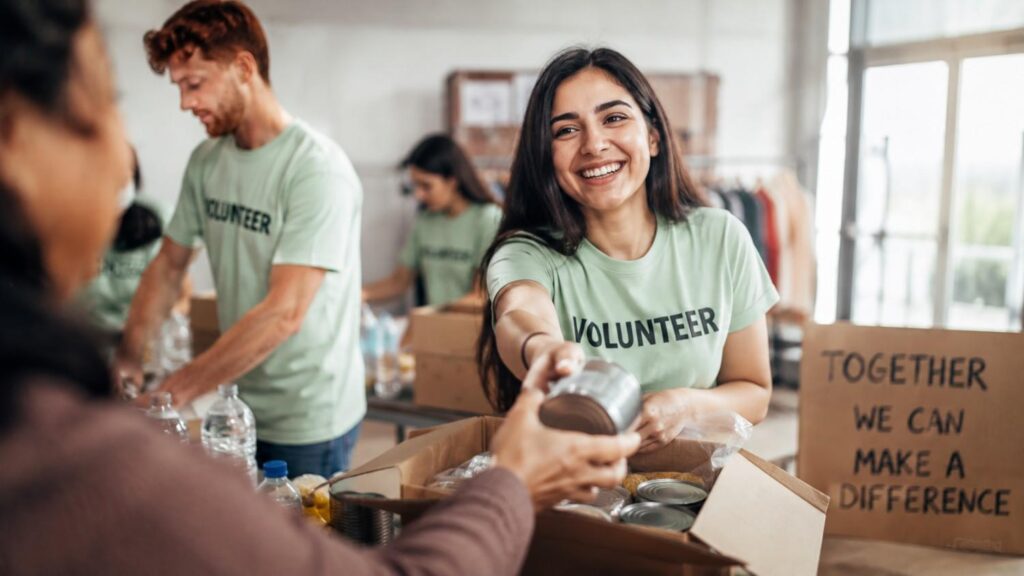
The Impact of Volunteering on Personal Growth: How Giving Your Time Can Change You
Volunteering is usually described through what people give: their time, energy, attention, knowledge, professional skills, or practical assistance. That contribution can be valuable to nonprofit organizations, community groups, schools, health initiatives, environmental projects, and informal networks of mutual support. Yet the experience can also change the person doing the volunteering.
A volunteer may encounter people they would never normally meet, solve unfamiliar problems, take responsibility for outcomes, practice communication, or see an important social issue at close range. These experiences can challenge assumptions and provide a practical environment for learning. Unlike purely theoretical self-development, volunteering often requires people to apply skills and values in real situations.
Global participation in volunteering is substantial. United Nations Volunteers’ 2026 State of the World’s Volunteerism Report estimates that billions of people participate in formal or informal volunteer activity. The report also connects volunteerism with wellbeing, skills, employability, social cohesion, and community resilience, while recognizing that volunteer experiences vary widely in structure and quality.
Understanding The Impact of Volunteering on Personal Growth therefore requires a broad perspective. Personal development can appear through stronger self-efficacy, greater purpose, increased empathy, new professional skills, wider social networks, and improved self-awareness. The evidence does not suggest that every volunteer will experience every benefit, but well-matched and well-supported roles can create unusually rich opportunities for practical growth.
How Does Volunteering Support Personal and Emotional Growth?
Volunteering can support emotional and personal development because it places individuals in situations where their actions have visible consequences beyond their own immediate interests. A person may be responsible for helping visitors, tutoring a student, distributing resources, coordinating an event, supporting a vulnerable individual, or contributing to an environmental project. These responsibilities create opportunities to experience competence, responsibility, and contribution in practical settings.
Volunteering can also support personal growth through volunteering by encouraging people to step outside familiar situations, build resilience, develop confidence, and gain a stronger sense of purpose.
Meaning is an important part of this process. People often find satisfaction when they can connect everyday actions with a larger purpose. Research reviews of volunteering frequently identify purposefulness, meaningfulness, life satisfaction, positive affect, self-efficacy, and social support among outcomes associated with volunteer participation. These findings suggest that helping can influence not only what volunteers do but also how they understand themselves.
Personal growth can also come from feedback and challenge. Completing a difficult task, being trusted with greater responsibility, solving an unexpected problem, or receiving appreciation from another person can provide evidence of personal capability. Over time, these experiences may reshape confidence more effectively than general encouragement because the volunteer has concrete evidence of what they accomplished.
The strongest emotional benefits are not guaranteed by simply signing up. Role fit, motivation, supervision, workload, appreciation, social interaction, and opportunities for reflection all matter. A volunteer who feels useful and supported may develop differently from someone who feels overwhelmed or disconnected. Quality of engagement is therefore central to understanding volunteering and personal development.
Purpose, Meaning, and Psychological Wellbeing
Purpose involves feeling that one’s activities contribute to something meaningful beyond immediate pleasure or obligation. Volunteering can provide that experience by connecting an individual’s time with a social, environmental, educational, cultural, or humanitarian goal. Even relatively small tasks may feel significant when volunteers understand how their contribution supports a broader outcome.
Research synthesis provides support for this relationship. The 2023 umbrella review of volunteering and wellbeing found relatively consistent evidence relating volunteer participation to purposefulness, meaningfulness, life satisfaction, social support, and sense of community. These outcomes suggest that volunteering may contribute to psychological wellbeing through more than simple momentary enjoyment.
Purpose can become particularly valuable during periods of transition. Retirement, unemployment, relocation, graduation, or changes in family responsibilities can disrupt familiar identities and routines. A regular volunteer commitment can provide structure, responsibilities, relationships, and a continuing sense that one’s time is useful.
However, meaningfulness remains personal. A prestigious role is not automatically more developmental than a small local commitment. The most valuable opportunity may be one closely connected with a person’s values and interests. When volunteers understand why the work matters and can see the relationship between their actions and the outcome, the experience is more likely to support sustained motivation and reflection.
Confidence, Self-Efficacy, and Resilience
Confidence often develops through evidence of capability rather than reassurance alone. Volunteering can provide repeated opportunities to complete unfamiliar tasks, interact with new people, solve problems, and accept responsibility. Each successful experience can gradually change a person’s belief about what they are capable of doing in future situations.
This process relates closely to self-efficacy, which refers to a person’s belief in their ability to organize and carry out actions needed to manage particular situations. Reviews of volunteering research have reported positive evidence around self-efficacy, empowerment, pride, and motivation, although the strength of findings differs across studies and volunteer settings.
Growth often occurs through small steps. Someone who initially avoids speaking may begin by greeting visitors, later answer questions, and eventually lead a short volunteer briefing. Another person may begin with simple administrative work and gradually become comfortable coordinating schedules or managing an event. Repeated mastery experiences make confidence more concrete.
Volunteering can also expose people to setbacks, uncertainty, and emotional difficulty. Learning to respond constructively may strengthen resilience, but only when challenges remain manageable. Organizations have an important role in providing training, supervision, and support. Difficulty can encourage development; chronic overload can produce stress instead. Sustainable growth requires a balance between challenge, capability, recovery, and appropriate boundaries.
How Can Volunteering Build Skills and Support Career Development?
Volunteer roles can function as practical learning environments because they require people to use skills in real situations rather than simply study them. Communication, organization, leadership, teamwork, adaptability, and problem-solving are often developed through repeated interaction with other people and real responsibilities. This makes volunteering particularly relevant for students, career changers, people returning to work, and professionals seeking experience outside their usual role.
Organizations that provide structured volunteer roles also highlight how these experiences can strengthen transferable skills through volunteer skill development, including leadership, teamwork, problem-solving, and time management.
OECD guidance has described community volunteering as a potentially useful career-development activity, particularly when participants receive exposure to workplace tasks, professionals, and organizational environments. The potential benefit comes from building human capital through skills, social capital through relationships, and cultural knowledge through familiarity with workplace expectations and professional environments.
United Nations Volunteers and International Labour Organization research has also discussed volunteer programs as possible pathways for developing hard and soft skills, self-esteem, professional contacts, and employment-related experience. Importantly, program design matters. A volunteer who receives meaningful tasks and guidance may gain far more career value than someone performing repetitive work with little learning or responsibility.
The critical distinction is between simply participating and deliberately learning. Recording 100 volunteer hours does not automatically demonstrate professional growth. Volunteers should identify what they actually did, the problems they solved, the people they worked with, and the outcomes they contributed to. Those details turn volunteer participation into evidence of capability that can later support interviews, applications, academic reflection, or career planning.
| Personal Growth Area | Development Through Volunteering | Long-Term Value |
|---|---|---|
| Confidence | Handling real responsibilities and receiving feedback | Greater self-efficacy |
| Communication | Speaking with team members, visitors, and community members | Stronger interpersonal communication |
| Leadership | Coordinating people, tasks, or projects | Better decision-making and leadership ability |
| Teamwork | Collaborating with people from different backgrounds | Improved cooperation and adaptability |
| Problem-Solving | Managing practical challenges and unexpected situations | Greater ability to handle workplace challenges |
| Career Awareness | Experiencing real tasks within an organization or field | More informed career decisions |
| Networking | Building relationships with volunteers and professionals | Broader professional and social connections |
| Empathy | Learning directly from different communities and experiences | Greater understanding and social awareness |
Communication, Teamwork, and Leadership Skills
Communication develops when people must listen carefully, explain information clearly, adapt their language to different audiences, and respond to questions or misunderstandings. Volunteer settings often provide these opportunities naturally. A community-center volunteer, for example, may need to explain procedures to visitors, coordinate with staff, and communicate respectfully with people from different backgrounds.
Teamwork develops through shared responsibility. Volunteers may work alongside people with different ages, personalities, experiences, and working styles. Completing a project requires cooperation, reliability, compromise, and an understanding of how individual tasks connect with the broader objective. These experiences can reveal strengths and weaknesses that classroom exercises may not expose.
Leadership can emerge even without a formal title. A volunteer might coordinate a small project, train new participants, organize resources, lead a meeting, solve a scheduling problem, or take responsibility when circumstances change. These are practical leadership experiences because they require judgment, communication, accountability, and consideration of other people.
To maximize skill development, I recommend approaching volunteering with one or two clear learning goals. Ask for responsibilities that require the skills you want to improve, request constructive feedback, and record examples of what you accomplished. This creates a deliberate learning cycle rather than leaving professional development entirely to chance.
Career Experience, Networks, and Employability
Volunteering can offer low-risk exposure to industries, professions, and organizational environments before someone makes a major career commitment. A person interested in healthcare, education, conservation, social services, events, or nonprofit management may learn more from direct involvement than from reading job descriptions alone. The experience can clarify both interests and limitations.
OECD guidance recognizes volunteering as a possible career-exploration activity because it can provide exposure to workplace tasks and professionals. Similarly, UNV and ILO discussions of volunteer programs identify skill acquisition, confidence, and professional contacts as potential mechanisms through which volunteering may support later employment outcomes.
Social networks can expand naturally through participation. Volunteers may work with nonprofit staff, community leaders, professionals, donors, students, retirees, or other volunteers whose backgrounds differ from their usual contacts. These relationships can provide information, mentoring, references, or awareness of future opportunities, although no connection should be treated merely as a transactional networking target.
Volunteering does not guarantee a job. Career value depends on role relevance, quality of supervision, the responsibilities performed, local labor-market conditions, and the individual’s ability to explain what they learned. The most useful approach is to translate experience into evidence: describe the situation, your responsibility, the actions you took, and the measurable or observable result you helped achieve.
Related Articles
How Does Volunteering Improve Social Connection and Perspective?
Many volunteer roles bring people together around a shared task or cause. That repeated participation can create relationships outside a person’s existing family, school, workplace, or friendship networks. Social contact may begin around practical responsibilities, but consistent cooperation can gradually develop into familiarity, belonging, mutual support, and meaningful connection.
Research supports this social dimension. The 2023 umbrella review identified relatively consistent positive evidence relating volunteering to social connectedness, social support, stronger social networks, and sense of community. A randomized controlled trial involving adults aged 50 to 70 in Hong Kong also found that a six-month telephone-based volunteering program improved several measures related to loneliness, social engagement, stress, and depressive symptoms.
The social value of volunteering goes beyond friendship. Volunteers may encounter people with different ages, occupations, cultures, abilities, beliefs, socioeconomic circumstances, or life histories. These interactions can challenge stereotypes and turn abstract social issues into real human experiences. The resulting perspective can influence empathy, judgment, values, and understanding of community needs.
This dimension is central to The Impact of Volunteering on Personal Growth because development involves more than improving individual performance. Personal growth can also mean becoming more aware of other people and more accurate about one’s own assumptions. Volunteering can provide that opportunity when relationships are based on respect, listening, and mutual participation rather than viewing communities simply as passive recipients of help.
Social Connection, Belonging, and Empathy
Belonging develops when people feel recognized as meaningful participants in a group. Volunteer organizations can create this structure through shared goals, recurring activities, responsibilities, and opportunities for cooperation. Someone who regularly attends a community project may begin to develop relationships with both other volunteers and the people the organization supports.
Evidence reviews have associated volunteering with stronger social connectedness, sense of community, social support, and wider social networks. These benefits may be particularly important for people whose daily lives provide limited opportunities for interaction, such as some retirees, newcomers to a community, remote workers, or individuals experiencing major life transitions.
Empathy can develop when volunteers encounter perspectives they previously understood only in abstract terms. Supporting older adults, refugees, children, people experiencing homelessness, patients, or environmental initiatives can reveal the complexity behind social issues that may otherwise be reduced to statistics or assumptions.
However, true empathy requires humility. Volunteering should not encourage the idea that the volunteer is automatically the expert or rescuer. Strong programs recognize community knowledge and dignity. Personal growth becomes deeper when volunteers listen, learn, and understand that meaningful service is often collaborative. Helping others and learning from others can happen at the same time.
Perspective, Gratitude, and Self-Awareness
Volunteering can alter perspective because it places people inside situations they might otherwise encounter only through news, statistics, or second-hand stories. Research involving crisis-line volunteers, for example, has described themes including learning, personal growth, understanding the human condition, gaining perspective, and gratitude. These experiences can influence how volunteers understand both society and themselves.
Healthy perspective should not be reduced to comparing hardship. Telling yourself that another person “has it worse” can oversimplify their circumstances and your own. A more useful form of reflection asks what the experience taught you about resilience, social systems, inequality, relationships, human needs, or the assumptions you carried into the role.
Self-awareness may also develop through repeated responsibilities. Someone may discover that they communicate calmly in difficult situations, struggle to delegate, enjoy teaching, dislike administrative work, or care much more deeply about a particular issue than expected. These discoveries can influence future career, educational, and personal decisions.
This form of growth is valuable because accurate self-knowledge improves decision-making. Volunteering allows individuals to observe themselves in action rather than relying only on personality labels or abstract reflection. Real responsibilities reveal how a person behaves when collaborating, solving problems, facing discomfort, receiving feedback, or responding to another person’s needs.
How Can You Get More Personal Growth From Volunteering?
Personal development does not automatically follow from every volunteer opportunity. A poorly matched role may provide little challenge or learning, while an excessively demanding one can create frustration or burnout. The quality of the experience depends on responsibilities, supervision, social interaction, organizational culture, motivation, time commitment, and whether the volunteer understands the purpose behind the work.
Research reinforces the importance of role design. United Nations Volunteers reporting emphasizes that the relationship between volunteering, wellbeing, skills, and employability is complex. Research on student volunteering also suggests that participation itself may be less important than what people actually do within a role and the quality of the developmental experiences available to them.
A useful strategy is to choose a role where community needs and personal learning goals overlap. Someone who wants to improve communication might select an appropriate public-facing position. A person interested in leadership could volunteer for event coordination or project organization. Someone seeking broader perspective may choose work that creates respectful contact with unfamiliar communities or social issues.
Reflection and boundaries complete the process. After volunteering, ask what challenged you, what you learned, and what you would approach differently next time. At the same time, monitor workload and emotional strain. Recent review evidence suggests that benefits are reported far more often than harms, but negative effects may be underreported. Sustainable volunteering should support contribution without requiring chronic exhaustion or personal neglect.
| Volunteering Approach | What to Look For | Personal Growth Opportunity |
|---|---|---|
| Choose meaningful work | A cause that genuinely matters to you | Stronger purpose and motivation |
| Select a skill-building role | Responsibilities that match your development goal | Practical skill development |
| Take meaningful responsibility | Tasks where your decisions affect outcomes | Confidence and self-efficacy |
| Seek feedback | Coordinators or experienced volunteers who can guide you | Faster learning and improvement |
| Reflect regularly | Notes about challenges, achievements, and lessons | Greater self-awareness |
| Build relationships | Opportunities to work with diverse people | Social connection and networking |
| Manage your commitment | A realistic schedule and clear boundaries | Sustainable participation |
| Increase responsibility gradually | More challenging tasks as your skills improve | Leadership and resilience |
Choose the Right Role and Set Development Goals
Begin by considering the cause or community you want to support, but investigate the actual responsibilities before committing. Two roles within the same organization can create completely different experiences. One may involve independent administrative work, while another requires teaching, public interaction, teamwork, problem-solving, or project leadership. The title alone rarely tells you what you will learn.
Next, identify one or two development goals. Examples include improving public speaking, strengthening organization, gaining leadership experience, becoming more comfortable with unfamiliar people, exploring a potential career, or learning how nonprofit organizations operate. Clear objectives help you recognize appropriate opportunities rather than choosing based only on convenience.
When appropriate, discuss these goals with the volunteer coordinator. A supportive organization may be able to provide training, mentorship, varied responsibilities, or gradual progression. You do not need to make personal development the organization’s responsibility, but communicating your interests can help create a better match between available work and your abilities.
Finally, make goals observable. “Become more confident” is broad; “lead a 10-minute briefing for new volunteers” provides a concrete target. Specific goals make progress easier to evaluate and encourage volunteers to notice the experiences that are actually contributing to their development.
Reflect, Set Boundaries, and Avoid Volunteer Burnout
Reflection helps convert experience into learning. After a shift or project, briefly record what happened, what responsibility you held, which challenges appeared, how you responded, and what you learned. These notes create a practical record of development and can later support job interviews, academic assignments, performance reviews, or personal goal-setting.
Feedback strengthens this process. Ask supervisors or experienced volunteers where you performed well and what you could improve. External observations can identify patterns you may miss yourself. Someone may discover that they communicate clearly but need stronger time management, or that they are highly dependable but hesitant to take initiative.
Boundaries are equally important. Some roles expose volunteers to emotional distress, crisis situations, heavy workloads, or difficult stories. Research on crisis-line volunteering has identified substantial satisfaction alongside possible risks to mental wellbeing. Persistent exhaustion, irritability, emotional numbness, dread, or difficulty disengaging from volunteer responsibilities deserve attention.
Personal growth should not require unlimited self-sacrifice. Sustainable volunteers understand what they can realistically contribute while maintaining work, family, relationships, sleep, and health. Adjusting hours, requesting supervision, changing responsibilities, or leaving a poorly matched role can be responsible decisions. Effective volunteering should create meaningful contribution without turning chronic overload into a badge of commitment.
Quick Answer About The Impact of Volunteering on Personal Growth
The Impact of Volunteering on Personal Growth can appear through stronger social relationships, greater purpose, increased confidence, broader perspectives, practical skills, and valuable professional experience. Volunteering puts people in situations where they contribute to something outside themselves while interacting with responsibilities, people, and challenges that may be unfamiliar. These conditions can provide meaningful opportunities for reflection, learning, and personal development.
Research generally supports a positive relationship between volunteering and several measures of wellbeing. Reviews have reported associations with life satisfaction, meaningfulness, social connectedness, self-efficacy, social support, and sense of community. However, the evidence is not equally strong for every outcome, and many studies are observational. This means responsible interpretation should distinguish association from guaranteed cause and effect.
The quality of the volunteer experience also matters. A role involving meaningful responsibilities, supportive supervision, interaction with others, and opportunities to learn is more likely to support development than an activity performed only to accumulate service hours. People may gain far more from one carefully chosen role than from several poorly matched commitments.
Personal growth through volunteering is therefore best understood as a process rather than an automatic benefit. Volunteers can increase the value of the experience by choosing suitable roles, setting development goals, requesting feedback, reflecting on challenges, and protecting healthy boundaries. These practices help turn community participation into a more intentional form of learning.
Personal Growth Goes Beyond Helping Others
Volunteering is primarily about contributing time, knowledge, effort, or practical support for the benefit of other people, organizations, or communities. Yet contribution and personal development do not have to compete. A well-designed volunteer experience can create mutual value: communities receive meaningful support while volunteers gain experiences that influence their abilities, confidence, relationships, and perspective.
The United Nations Volunteers’ State of the World’s Volunteerism Report recognizes that volunteering can interact with wellbeing, skills, employability, solidarity, and community resilience. This broader view is useful because it shows that volunteering is not simply a charitable transaction. It can also become a setting in which individuals participate actively in social life and encounter unfamiliar responsibilities.
The personal outcomes vary considerably. Someone volunteering at a community center may develop stronger interpersonal skills. A student organizing an event may learn planning and leadership. A retired professional mentoring younger people may gain structure, social connection, and a renewed sense of contribution.
None of these benefits should be treated as automatic. Growth depends on what volunteers actually do, how meaningful the work feels, how well the organization supports them, and whether they have opportunities to reflect. Volunteering provides the environment for development; thoughtful participation helps determine what a person takes from it.
What the Research Shows Overall
The research on volunteering and personal wellbeing is broadly encouraging, but it also requires careful interpretation. A major umbrella review published in 2023 examined evidence across previous reviews and found positive findings in psychological, social, and some physical domains. Life satisfaction, meaningfulness, purpose, social connectedness, and social support were among the outcomes with relatively consistent positive evidence.
At the same time, the review cautioned that the methodological quality of much of the existing literature was limited. This matters because people who volunteer may already differ from non-volunteers in health, income, social resources, personality, or community participation. These differences can make it difficult to determine exactly how much improvement is caused by volunteering itself.
Earlier systematic-review research has reached a similar conclusion. Observational studies often associate volunteering with greater wellbeing, lower depression, and higher life satisfaction, while experimental evidence is smaller and less consistent. More recent randomized studies do provide evidence of benefits in particular populations and programs, but those findings cannot automatically be generalized to every type of volunteering.
The most balanced conclusion is that volunteering creates potentially valuable conditions for growth. Meaningful activity, social interaction, responsibility, learning, and contribution can support development, but outcomes depend on the individual, the role, program quality, level of commitment, and broader personal circumstances.
Frequently Asked Questions About The Impact of Volunteering on Personal Growth
Questions about volunteering often focus on whether the experience genuinely changes people or simply provides a temporary feeling of satisfaction. Research suggests that volunteering can be connected with meaningful personal, social, and professional outcomes, but the effects depend heavily on what people do, why they participate, and the quality of the environment in which the activity occurs.
Some benefits are easier to understand than others. Skills such as communication or organization can develop through repeated practice, while social connection can emerge through regular interaction. Psychological outcomes such as confidence, meaning, or wellbeing are more complex because they are influenced by many factors beyond volunteering and can be difficult to measure precisely.
Another important distinction is between correlation and causation. People who are already socially active, healthy, or confident may be more likely to volunteer. This means researchers must consider whether volunteering produces an outcome, whether existing characteristics influence participation, or whether both processes occur together. Stronger experimental studies help address this question but are less common.
The FAQs below summarize the most practical conclusions from the research. They should be viewed as general guidance rather than promises that every volunteer will experience the same result. Role fit, support, motivation, workload, community context, duration, and individual circumstances can all influence the personal-development value of volunteering.
How does volunteering help personal growth?
Volunteering can support personal growth by placing people in situations that require responsibility, communication, problem-solving, cooperation, and reflection. Instead of learning these abilities only in theory, volunteers often use them while completing real tasks that affect organizations, communities, or individuals.
Research reviews also associate volunteering with outcomes including purpose, life satisfaction, self-efficacy, social connectedness, and sense of community. These findings suggest that development can be psychological and social as well as practical.
The amount of growth depends on what the volunteer actually experiences. Repetitive or poorly supported tasks may offer fewer developmental opportunities than roles involving meaningful responsibility, learning, feedback, and interaction.
Volunteers can strengthen the process by setting goals and reflecting on their experiences. Asking what changed, what was difficult, what skills improved, and what was learned about other people helps transform activity into more deliberate personal development.
Does volunteering improve confidence?
Volunteering can support confidence when it provides manageable challenges and opportunities for successful performance. Completing unfamiliar tasks, receiving positive feedback, helping solve a real problem, or being trusted with responsibility gives people direct evidence that they can handle situations they may once have avoided.
This relates closely to self-efficacy. Research reviews have reported positive associations between volunteering and measures such as self-efficacy, empowerment, pride, and psychological wellbeing, although findings are not identical across every study or volunteer population.
Confidence may grow gradually rather than dramatically. Someone who initially feels nervous interacting with visitors may become comfortable answering questions, then training another volunteer, and eventually taking responsibility for part of a program.
The quality of support matters. Tasks that are challenging but manageable can encourage growth, while overwhelming responsibilities without adequate training may undermine confidence. Effective organizations help volunteers develop through guidance, realistic expectations, constructive feedback, and opportunities to progress.
What skills can you learn through volunteering?
Volunteer roles can develop communication, teamwork, leadership, organization, adaptability, time management, problem-solving, and interpersonal skills. The specific abilities depend on the responsibilities involved. A fundraising role develops different skills from mentoring, environmental work, event coordination, or administrative volunteering.
These skills become especially valuable when volunteers use them repeatedly in realistic situations. Communicating with a member of the public, coordinating an event team, solving a logistics problem, or training another volunteer involves practical performance rather than simulated exercises.
OECD and UNV-related research also recognizes volunteering as a potential setting for workplace learning, career exploration, professional contact, and development of human and social capital. However, benefits depend on the quality and design of the role.
To make the learning transferable, volunteers should document concrete examples. Instead of saying “I developed leadership,” describe the project coordinated, the people involved, the problem addressed, the action taken, and the result achieved.
Can volunteering improve mental wellbeing?
Research generally associates volunteering with positive measures such as life satisfaction, purpose, social connectedness, and psychological wellbeing. Some reviews also report associations with lower depression, although much of the evidence is observational and therefore does not prove that volunteering alone caused the improvement.
Particular programs have produced stronger evidence. Randomized studies in some populations have found improvements in outcomes such as loneliness, social engagement, stress, and depressive symptoms, showing that structured volunteering can produce measurable benefits under certain conditions.
The effect will not be the same for everyone. A meaningful and supportive role may strengthen connection and purpose, while an emotionally demanding or poorly managed role could create additional stress.
Volunteering should never be presented as a replacement for professional mental-health treatment. Someone experiencing depression, anxiety, trauma, or another mental-health condition may enjoy volunteering as part of life, but clinical support should be based on individual healthcare needs.
Can volunteering help your career?
Volunteering can support career development when it provides relevant responsibilities, useful skill practice, exposure to a profession, or relationships with people working in a field of interest. Students and career changers may find it particularly useful for exploring environments before making larger educational or employment commitments.
OECD guidance identifies community volunteering as a possible career-development activity, while UNV and ILO work highlights skills, competencies, self-esteem, and professional contacts as potential benefits of well-designed volunteer programs.
The value depends on relevance and quality. Ten hours coordinating a meaningful project may provide stronger evidence of capability than many hours spent on tasks that do not develop or demonstrate transferable skills.
Volunteering does not guarantee employment. Candidates still need to explain what they learned and how the experience relates to the position they want. Strong résumé and interview examples focus on responsibilities, actions, achievements, teamwork, and measurable outcomes rather than simply listing an organization.
Can volunteering have negative effects?
Yes. Although positive outcomes are reported more frequently, volunteering can produce stress, emotional exhaustion, overload, frustration, or vicarious distress when demands become excessive. This is especially relevant in crisis, health, caregiving, or emotionally intense roles.
Recent review evidence suggests that potential harms may be underreported compared with benefits. Role type, time commitment, organizational support, supervision, emotional exposure, and the volunteer’s wider responsibilities can influence whether participation remains sustainable.
Warning signs include persistent exhaustion, dread before shifts, irritability, difficulty disconnecting from the role, reduced attention to personal responsibilities, or feeling unable to decline additional work.
Healthy boundaries are therefore part of effective volunteering. People can reduce hours, request support, change responsibilities, take a break, or leave a role that is no longer appropriate. A commitment to helping others does not require ignoring one’s own health and limitations.
Conclusion
The Impact of Volunteering on Personal Growth extends well beyond the immediate satisfaction of contributing to a worthwhile cause. Volunteering can place people in situations that develop confidence, communication, resilience, leadership, empathy, and practical problem-solving while also creating relationships and exposing volunteers to experiences outside their normal routines.
Research supports a broadly positive relationship between volunteering and outcomes such as social connectedness, meaning, purpose, life satisfaction, self-efficacy, and wellbeing. However, the evidence should not be exaggerated. Many studies are observational, research quality varies, and people who choose to volunteer may already differ from non-volunteers in ways that affect outcomes.
Professional benefits are equally dependent on context. Volunteer roles can provide skill practice, career exploration, networks, and examples of responsibility, but value comes primarily from what the person actually does and learns. Simply accumulating service hours is less useful than gaining meaningful experience and being able to explain that experience clearly.
The strongest approach combines contribution with reflection. Choose a cause that matters, accept responsibilities that stretch your abilities without overwhelming you, seek feedback, pay attention to what the experience teaches you, and maintain healthy boundaries. Personal growth through volunteering is rarely produced by the number of hours alone. It emerges from thoughtful engagement with people, responsibilities, challenges, and lessons.
The Most Important Personal-Growth Benefits
The most useful personal-growth benefits of volunteering can be grouped into five areas: purpose, confidence, skills, connection, and perspective. Purpose comes from contributing to a meaningful goal. Confidence develops through successful action. Skills grow through repeated practice. Connection emerges through relationships, while perspective develops by encountering experiences outside one’s normal environment.
These areas often reinforce one another. A volunteer who becomes more confident may be willing to take leadership responsibilities. Greater social connection can create professional or personal opportunities. Wider perspective may influence values, educational decisions, or career goals.
The change does not need to be dramatic to matter. Personal development often appears through subtle improvements in judgment, communication, patience, self-awareness, reliability, and comfort with uncertainty. Those small changes can accumulate over months or years.
The most important benefit will differ between individuals. A student may value experience and confidence, while a retiree may value connection and purpose. The strength of volunteering lies partly in its flexibility: the same act of contribution can create very different developmental outcomes depending on the person and role.
Final Takeaway
Choose volunteering first because the work addresses a genuine need, but recognize that contributing and learning can happen together. A strong volunteer relationship respects the community while giving participants opportunities to develop skills, relationships, awareness, and confidence.
Set at least one personal-development objective when you begin. The goal might involve communication, leadership, professional exploration, social confidence, or understanding a particular issue. A clear objective helps you recognize whether the role is providing useful experiences.
Reflect periodically rather than waiting until the experience ends. Ask what surprised you, what challenged you, how you responded, and what you now understand differently. This simple habit turns isolated activities into a more coherent process of learning.
The best volunteer experiences create mutual value. Communities receive useful, respectful support while volunteers leave with deeper knowledge, stronger relationships, practical experience, and a more accurate understanding of themselves. That combination captures the most meaningful Impact of Volunteering on Personal Growth.